Welcome back to Books With Cause. Let’s dive straight into my latest review.
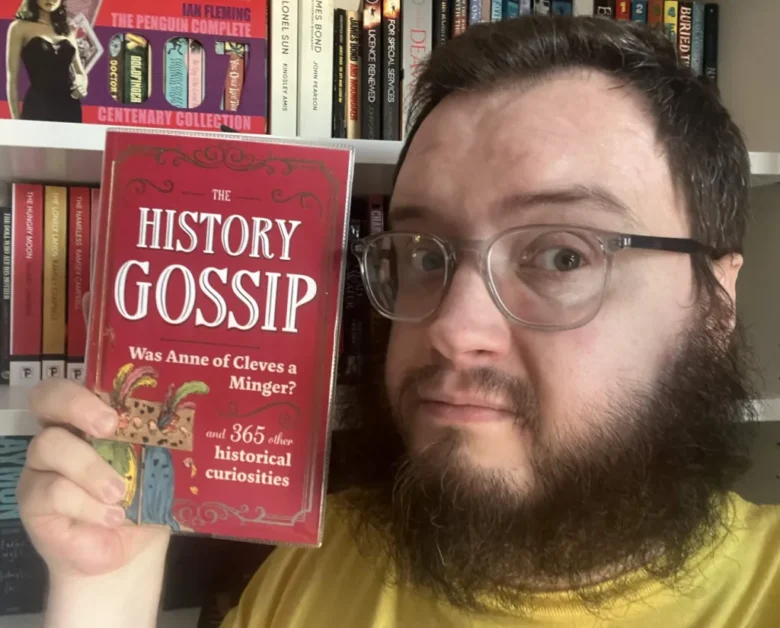
“Was Anne of Cleves a minger?” is asked on the front of this book. Finally, somebody is asking the important questions. And this was a reference I understood thanks to seeing Six the Musical.
I’ve had a mixed relationship with history over the years. I remember learning about the Tudors in year five. A period that also included us dressing up in period clothes to go on a school trip to Kentwell Hall. Upon arrival, we “converted our money” before walking through a time tunnel and going back in time. Everybody who worked there was also dressed in clothes of the time, and they had things for sale which we could buy with our Tudor period currency. I would’ve been ten at the time, and I remember really enjoying the day.
Then it came to secondary school, and I went through a mild rebellious phase. I decided that I would only put effort into the lessons I enjoyed, which were English and Drama, and for everything else I did the bare minimum. And in Year 8 history, I did even less than that. I don’t say this with any pride at all; I just didn’t care and didn’t understand why we had to learn about history. My teacher at the time was an old boy called Mr Raine. When I look back now, I didn’t actually have anything against him; he was trying his best with me and didn’t like the fact that I didn’t do any work in his lessons. How dare he. I remember hiding from him on parents’ evening because I knew he wanted to tell my parents how lazy I was in his class. I also remember thinking he was so old that he was probably there for most of the things he was teaching about. I realise now that’s nothing short of an exaggeration, and he can’t have been that old. But I imagine he’s not with us anymore, and I do regret the way I treated him at the time.
My point is that I believe that education is sometimes wasted on the youth. The older I get, the more interested I find myself becoming in certain historical periods. I have a hunger to know things, but the majority of the things I want to know may never be known. While the majority of what I read will forever be fiction, I like to mix things up from time to time by reading something factual. I discovered Katie Kennedy by accident when I was doomscrolling one day. I instantly found myself drawn to the way she talked about history on her little videos. Her Geordie accent is lyrical, and I also enjoy the way she uses modern vernacular to almost make history feel contemporary. And when I heard she’d written a book, I knew I had to read it.
This book takes the form of a different historical event for every day of the year, but from any point in history. For example, January 1st, 1540 is the day that Anne of Cleves supposedly arrived in England to marry Henry VIII. January 2nd, 1890 is the day that Alice Sanger became the first female member of staff in the White House. And so on, and so on. That hopefully gives you an idea of the range. We’ve got all of history to play with and all the countries in the world, so there has to be multiple events for every day of the year over the course of time. I imagine that Kennedy had a job on her hands of deciding which one to pick for each day.
I learnt a lot in this book that I never knew. For example, I didn’t realise that Gandhi took a vow of celibacy and would sleep next to naked women, including his own grandniece, to test his resolve. I don’t think I want to know how many times his resolve failed.
Kennedy tells these snippets of stories in a way that only she can. She uses deliberate anachronisms, which I think gives a contemporary reader something to compare it to. It goes to illustrate the point that human nature really hasn’t changed at all. All Henry VIII really wanted was someone new to shag after the last wife pegged it. But unlike your mate down the pub, he didn’t have the luxury of Tinder to find the next one.
My Goodreads Rating: ★★★☆☆ (3 stars)